Venus
Venus is the second planet from the Sun, and the sixth largest planet. It’s the hottest planet in our solar system.
All about venus

Twin Sister
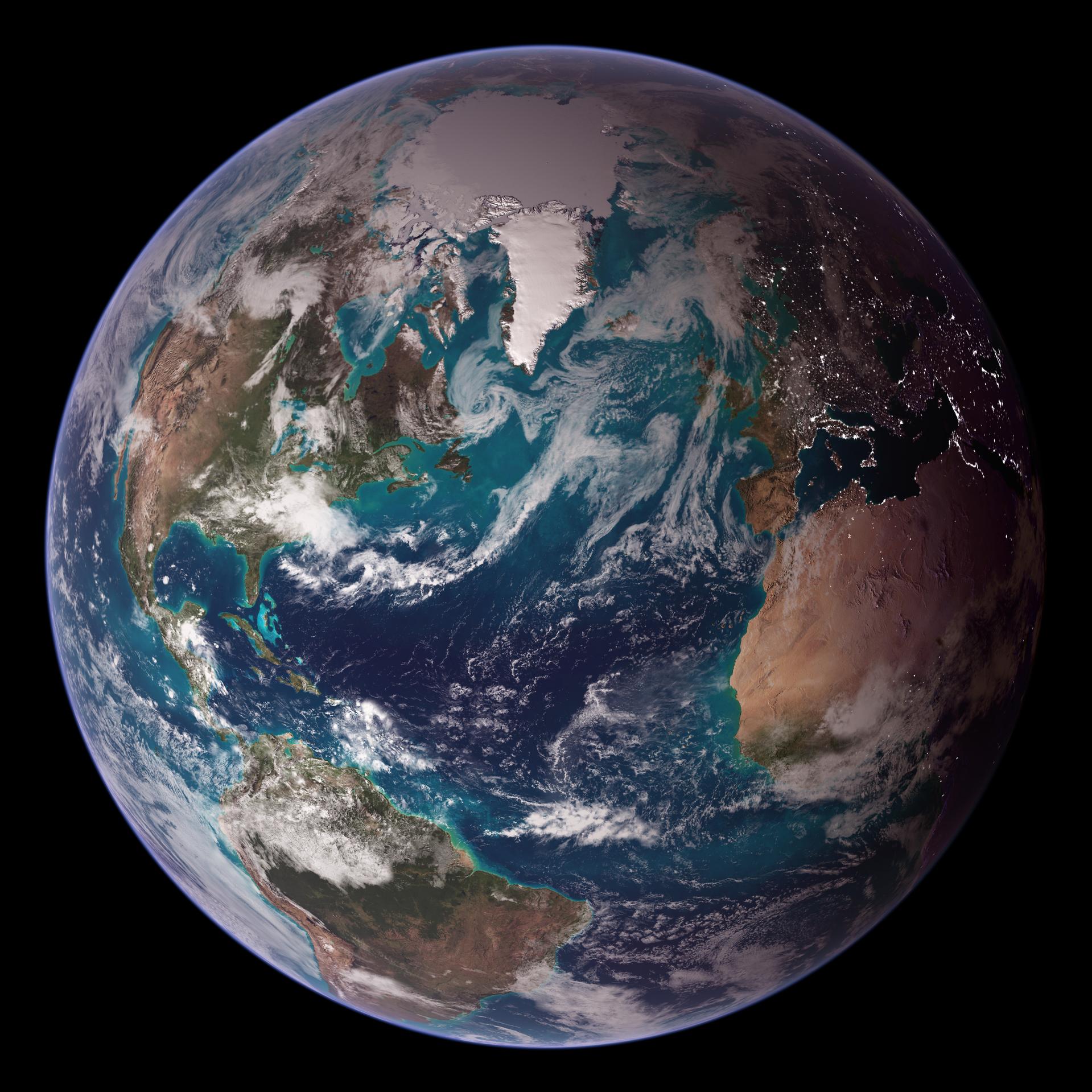
Venus is similar in size to Earth.

'Close' Neighbor
At its nearest Venus, is 38 million miles (about 61 million km) from Earth.

Long Days
Venus' day is longer than its year.
Active Surface?
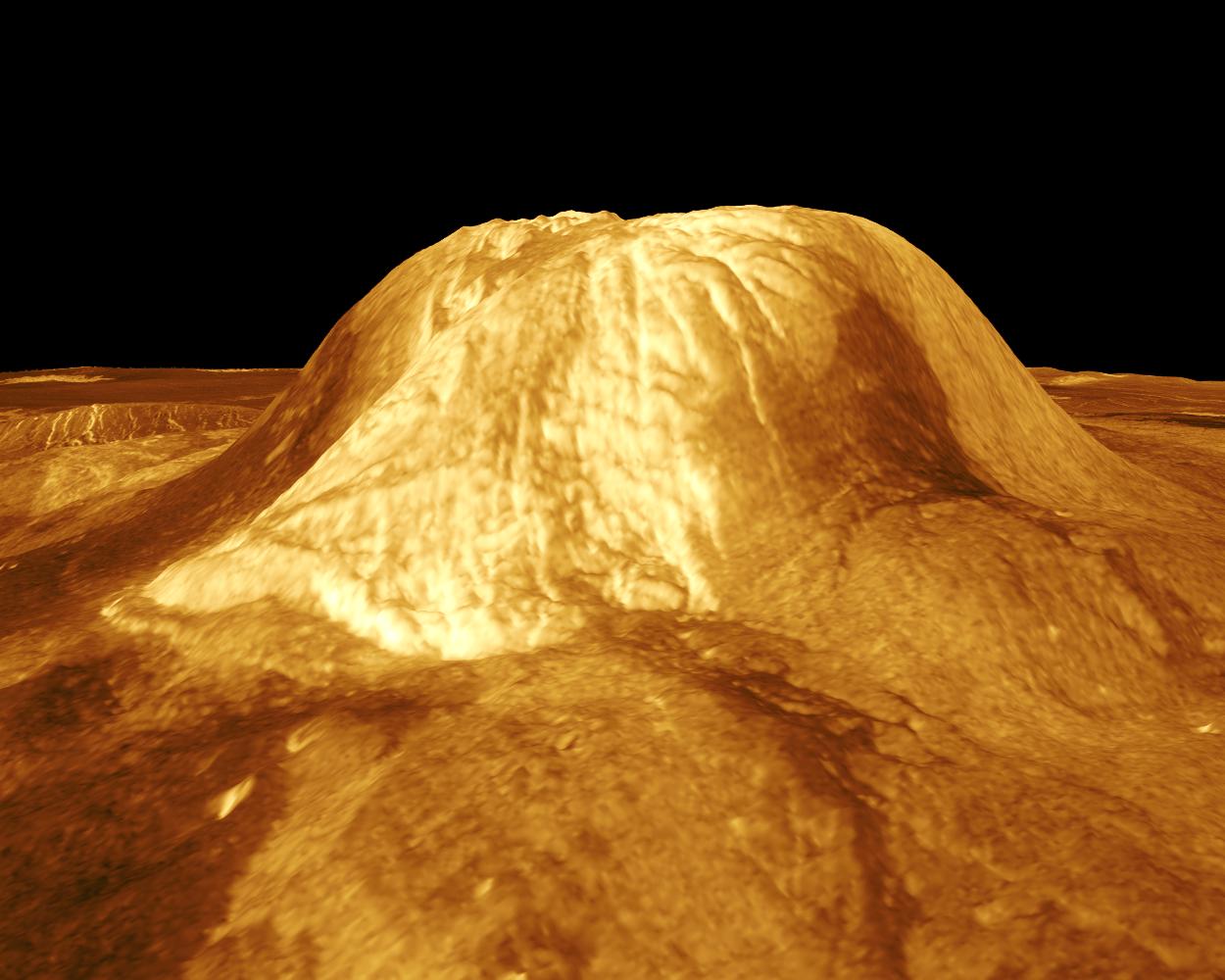
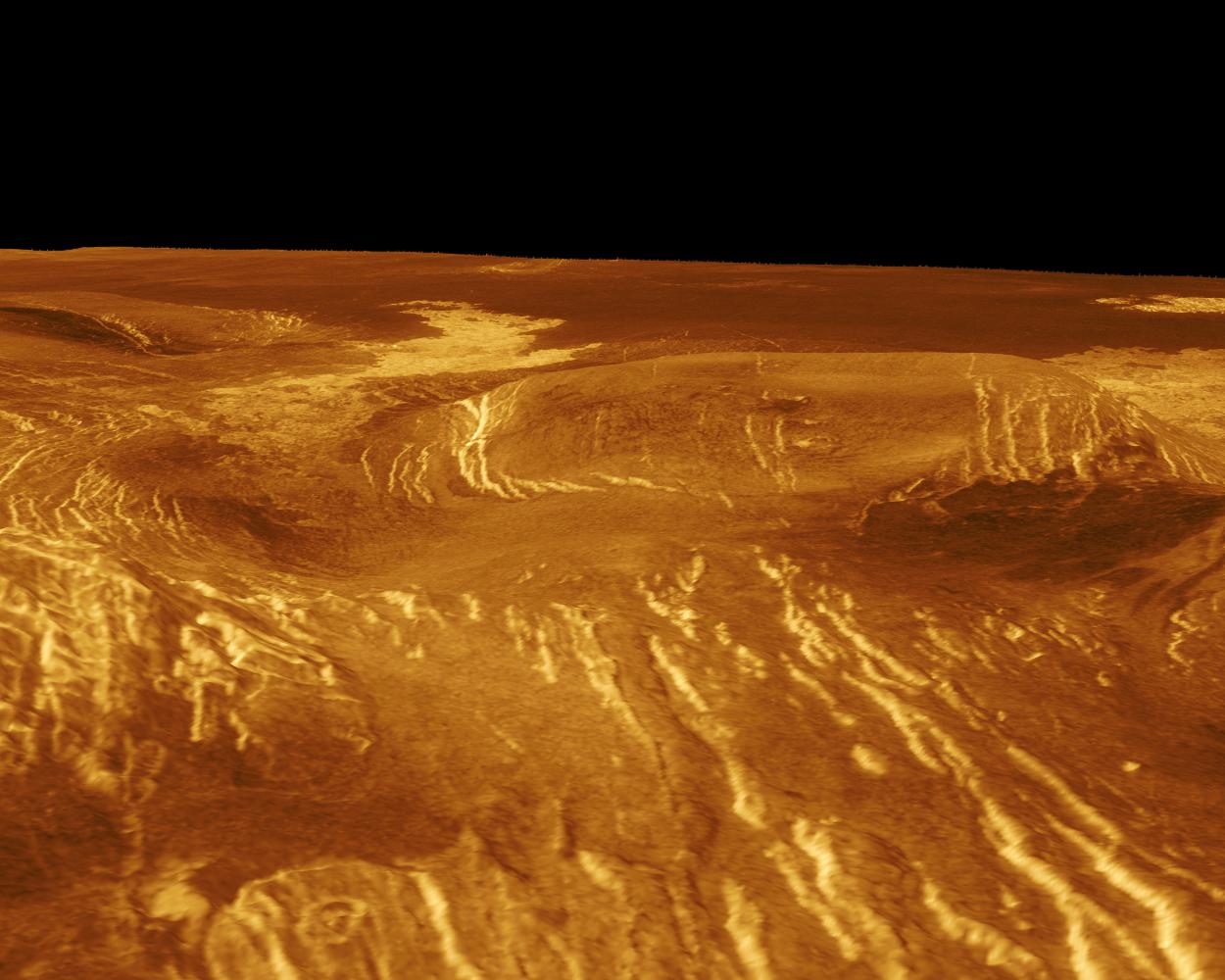
Venus has volcanic plains and rifts.

'Recently' Resurfaced
Venus' surface appears young (100s of millions of years.)

Runaway Greenhouse
Venus’ thick atmosphere traps heat.
Foul Clouds
Venus' sulfuric acid clouds smell like rotten eggs.

Science Hot Spot
More than 40 spacecraft have visited.

Ingredients for Life?
Venus is an unlikely place for life as we know it.
Backward Sunrise
The Sun rises in the west; sets in the east.
Planet Venus Overview
Venus is the second planet from the Sun, and the sixth largest planet. It’s the hottest planet in our solar system.
Venus is a cloud-swaddled planet named for a love goddess, and often called Earth’s twin. But pull up a bit closer, and Venus turns hellish. Our nearest planetary neighbor, the second planet from the Sun, has a surface hot enough to melt lead. The atmosphere is so thick that, from the surface, the Sun is just a smear of light.
In some ways it is more an opposite of Earth than a twin: Venus spins backward, has a day longer than its year, and lacks any semblance of seasons. It might once have been a habitable ocean world, like Earth, but that was at least a billion years ago. A runaway greenhouse effect turned all surface water into vapor, which then leaked slowly into space. The present-day surface of volcanic rock is blasted by high temperatures and pressures. Asked if the surface of Venus is likely to be life-bearing today, we can give a quick answer: a hard “no.”
Further, Venus may hold lessons about what it takes for life to get its start – on Earth, in our solar system, or across the galaxy. The ingredients are all there, or at least, they used to be. By studying why our neighbor world went in such a different direction with regard to habitability, we could find out what could make other worlds right. And while it might sound absurd, we can’t rule out life on Venus entirely. Temperature, air pressure, and chemistry are much more congenial up high, in those thick, yellow clouds.
Venus




Why Return to Venus?
How did Venus become a sulfurous inferno, while Earth evolved to become the only known world with life?
Although not currently habitable, Venus lies within the Sun’s "Goldilocks zone," and may have been habitable before Earth.
Read More
VERITAS
Venus Emissivity, Radio science, InSAR, Topography, And Spectroscopy
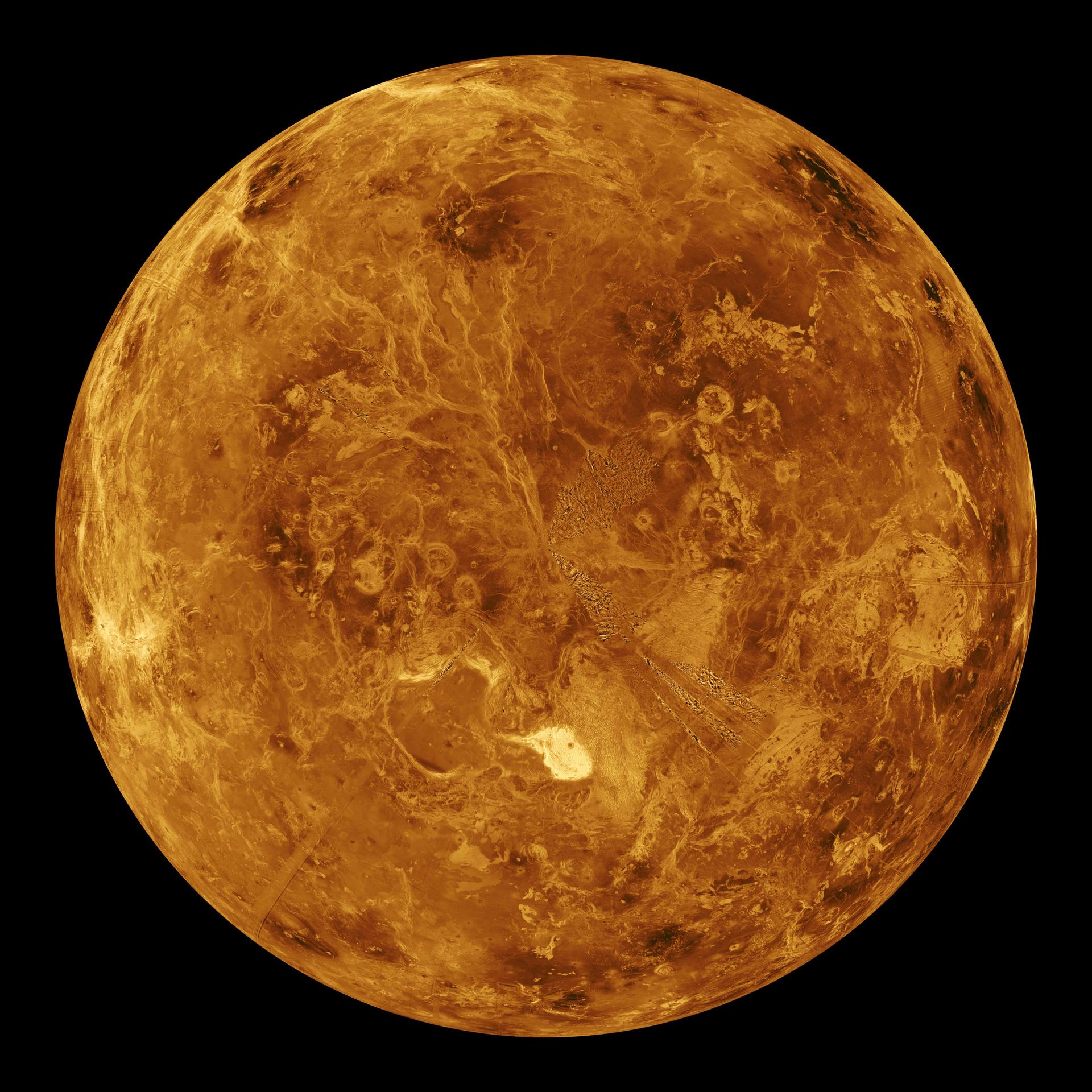
VERITAS, together with NASA’s planned Davinci mission, represents the first U.S.-led exploration of Venus since Magellan three decades ago. The mission is designed to bring the VERITAS science investigations into a low, circular orbit around Venus, in order to collect high-resolution, global maps of the hellish surface hidden beneath the clouds.
Read More
DAVINCI
Deep Atmosphere Venus Investigation of Noble gases, Chemistry, and Imaging
DAVINCI will study Venus from its clouds down to the planet's surface – the first mission to study Venus using both flybys and a descent probe.
Read More
EnVision
ESA's Cosmic Vision Program
ESA has selected EnVision to make detailed observations of Venus. As a key partner in the mission, NASA is providing the Synthetic Aperture Radar, called VenSAR, to make high-resolution measurements of the planet’s surface features.
Read More
Pop Culture
Because it’s so bright and easy to see in the sky, Venus has played a role in popular culture since ancient times, inspiring writing and song.
It was called the most beautiful star in the sky by Homer, author of "The Iliad" and "The Odyssey" – two of the oldest and most important works in Greek literature.
More recently, Venus became a popular venue for 20th-century science fiction writers, including Edgar Rice Burroughs (“Pirates of Venus,” 1934); Arthur C. Clarke (“Before Eden,” 1961); and C.S. Lewis (“Perelandra,” 1943).
Australian author Shirley Hazzard won the 1980 National Book Critics Circle Award for fiction with her book, “The Transit of Venus,” about two orphaned sisters. American author John Gray used the planet and its masculine counterpart to explain relationships in his 1992 book “Men Are From Mars, Women Are From Venus.”