Solar System Exploration
Join us as we explore our planetary neighborhood: The Sun, planets, moons, and millions of asteroids and comets.
featured missions

Europa Clipper
Launching Oct. 10, 2024, to Jupiter's icy moon, Europa.

Psyche
Launched on a mission to a metal-rich asteroid, arriving 2029.

OSIRIS-APEX
On its way to explore asteroid Apophis.

Lucy
En route to Jupiter's Trojan asteroids.

Perseverance Rover
Exploring the surface of Mars since 2021.

OSIRIS-REx
Delivered asteroid Bennu sample in September 2023.
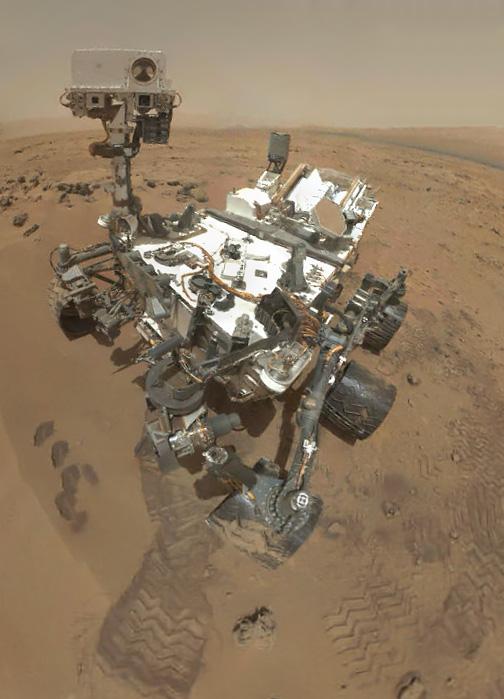
Curiosity Rover
Exploring the surface of Mars since 2012.

Lunar Reconnaissance Orbiter
Orbiting the Moon since 2009.

BepiColombo*
En route to Mercury orbit in 2025. *ESA/JAXA-led.

Mars Reconnaissance Orbiter
Orbiting Mars since 2006.

MAVEN
Orbiting Mars since 2014.

Mars Odyssey
Orbiting Mars since 2001.

Mars Express*
Orbiting Mars since 2003. *ESA-led.

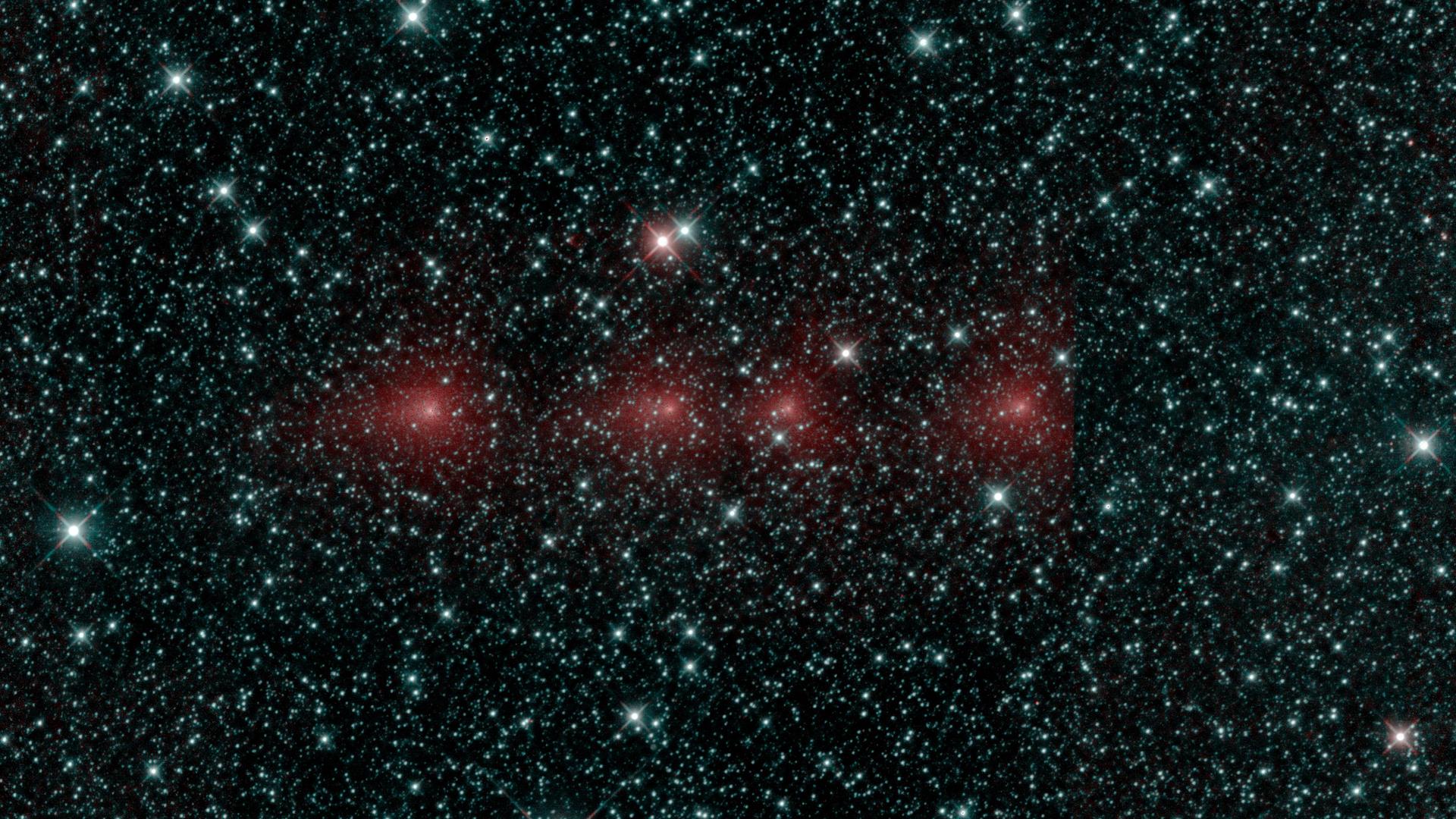
NEOWISE
Asteroid and comet hunter since 2009.

Juno
Orbiting Jupiter since 2016.

New Horizons
Exploring the Kuiper Belt since 2015.

JUICE*
Jupiter moon arrival in 2034. *ESA-led.
Solar System Overview
The solar system has one star, eight planets, five dwarf planets, at least 290 moons, more than 1.3 million asteroids, and about 3,900 comets. It is located in an outer spiral arm of the Milky Way galaxy called the Orion Arm, or Orion Spur. Our solar system orbits the center of the galaxy at about 515,000 mph (828,000 kph). It takes about 230 million years to complete one orbit around the galactic center.
We call it the solar system because it is made up of our star, the Sun, and everything bound to it by gravity – the planets Mercury, Venus, Earth, Mars, Jupiter, Saturn, Uranus, and Neptune; dwarf planets Pluto, Ceres, Makemake, Haumea, and Eris – along with hundreds of moons; and millions of asteroids, comets, and meteoroids.
10 THINGS about our solar system
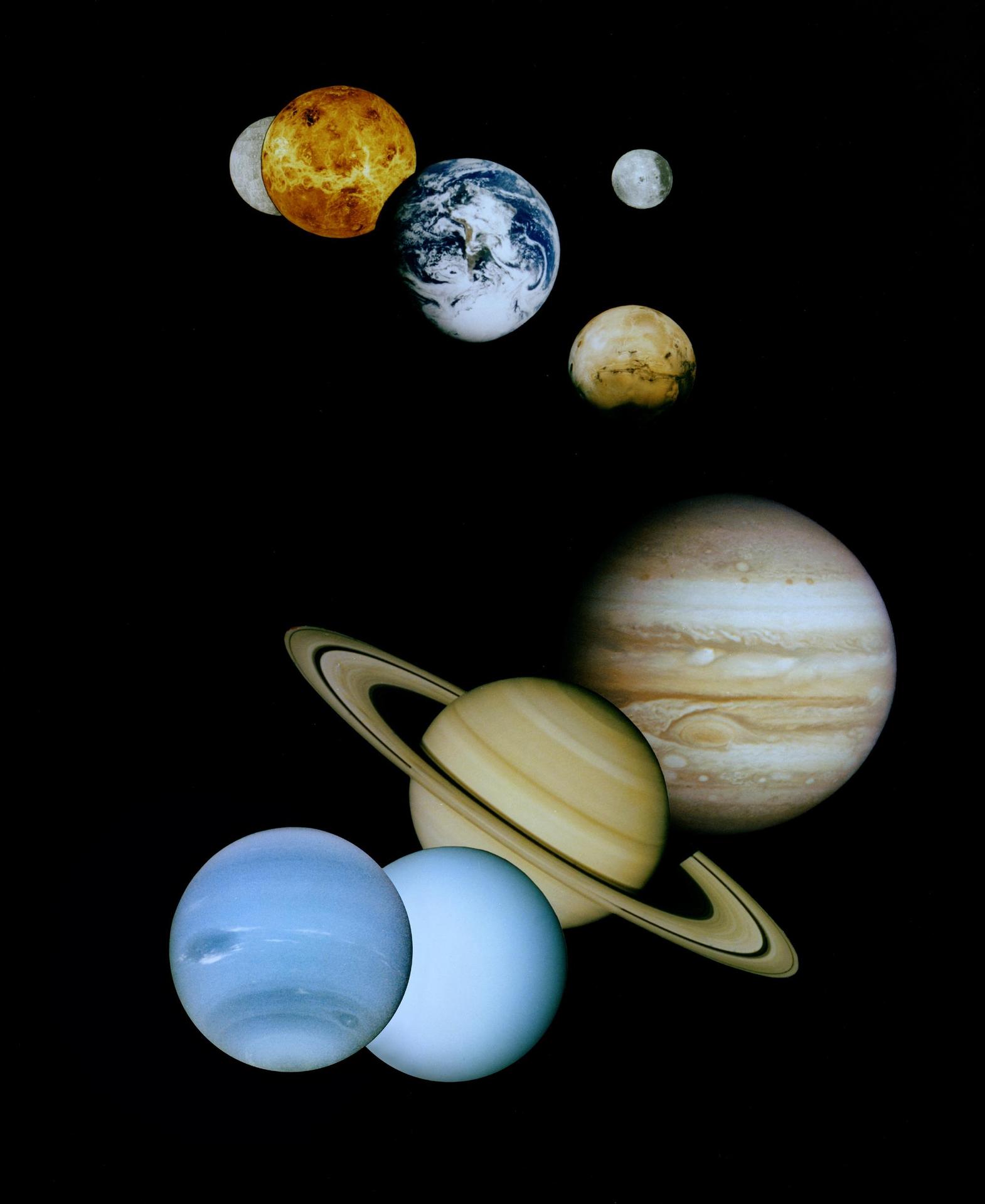
Many Worlds
Our solar system has a star, eight planets, five dwarf planets, and thousands of asteroids, and comets.

Meet Me in the Orion Arm
Our solar system orbits the center of the Milky Way galaxy. We’re in one of the galaxy’s four spiral arms.

A Long Way Around
It takes our solar system about 230 million years to complete one orbit around the galactic center.

Spiraling Through Space
There are three general kinds of galaxies: elliptical, irregular, and spiral. The Milky Way is a spiral galaxy.

Room to Breathe
Our solar system has no atmosphere. But it has many worlds – including Earth – with many kinds of atmospheres.

Many Moons
Our solar system has more than 200 moons.

Ring Worlds
The four giant planets – and at least one asteroid – have rings.

Getting Out There
More than 300 robotic spacecraft have left Earth's orbit, and 24 U.S. astronauts have traveled to the Moon.

Life as We Know It
So far, Earth is the only place we've found life in our solar system, but we’re looking.

Going Interstellar
The Voyagers are the only spacecraft to reach interstellar space.


When is the Next Full Moon?
Our detailed daily guide to the night sky includes full Moon lore, eclipses, asteroid flybys, and more.
Learn More
NASA's Eyes
Experience Earth, our solar system, nearby asteroids, the universe, and the spacecraft exploring them with immersive real-time 3D web-based apps. Start exploring your solar system now!
Explore Eyes
Latest News


Why is Methane Seeping on Mars? NASA Scientists Have New Ideas

NASA Selects New Aircraft-Driven Studies of Earth and Climate Change

Hubble Captures a Bright Galactic and Stellar Duo

AI for Earth: How NASA’s Artificial Intelligence and Open Science Efforts Combat Climate Change