Jupiter
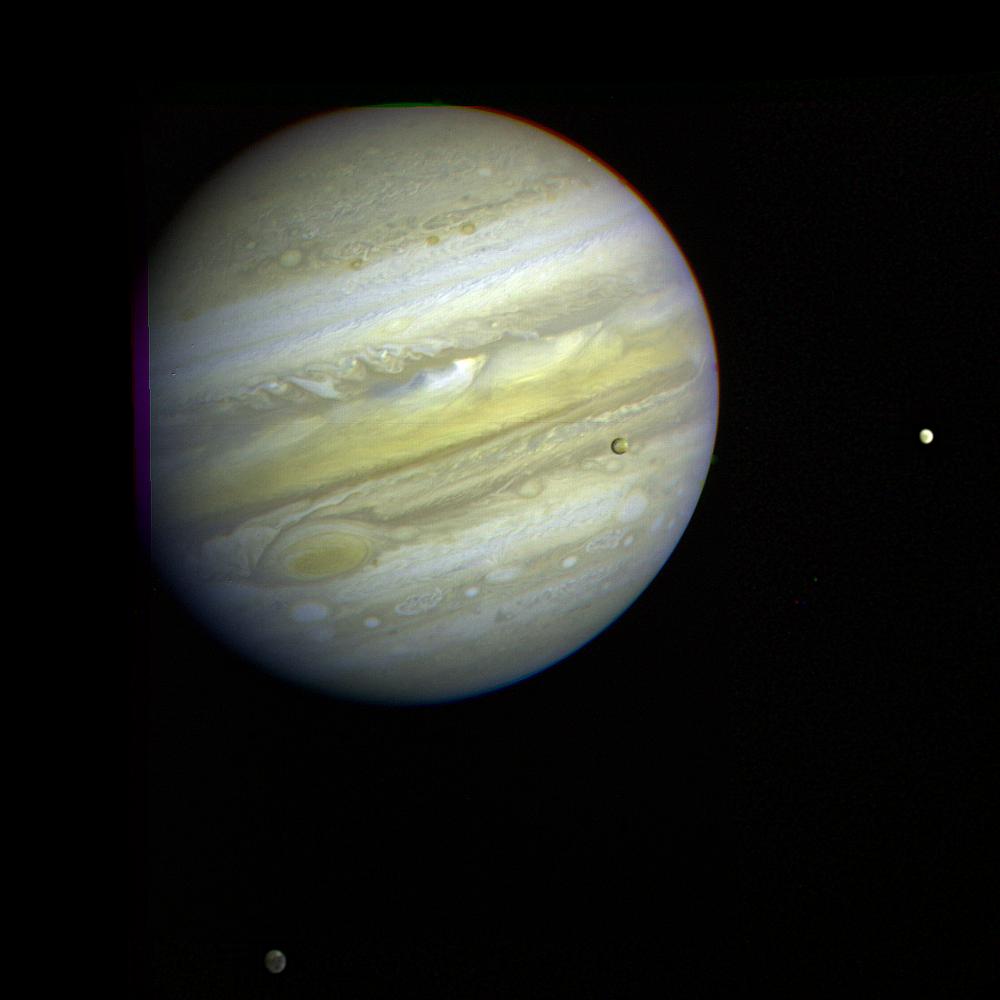
Jupiter is the fifth planet from the Sun, and the largest in the solar system – more than twice as massive as the other planets combined.
All About Jupiter

The Biggest
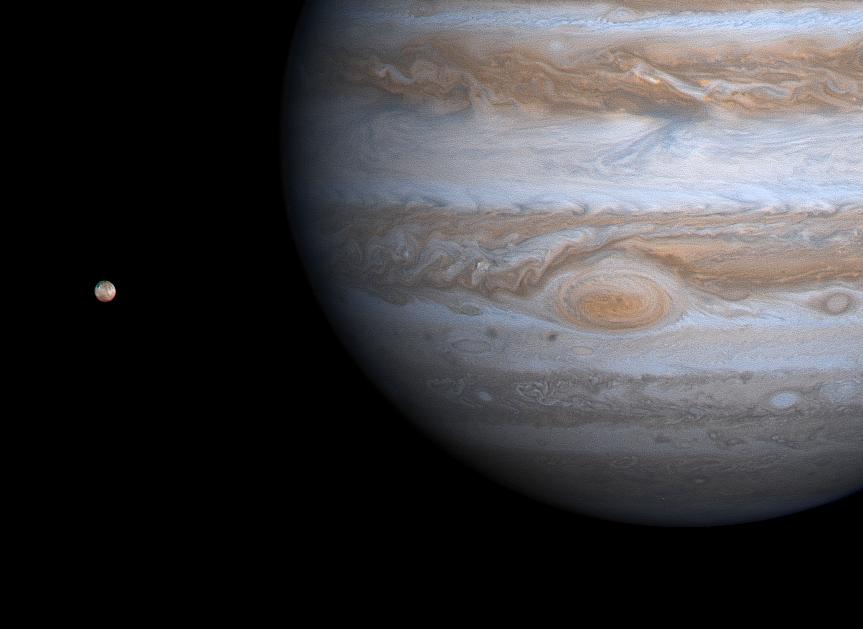
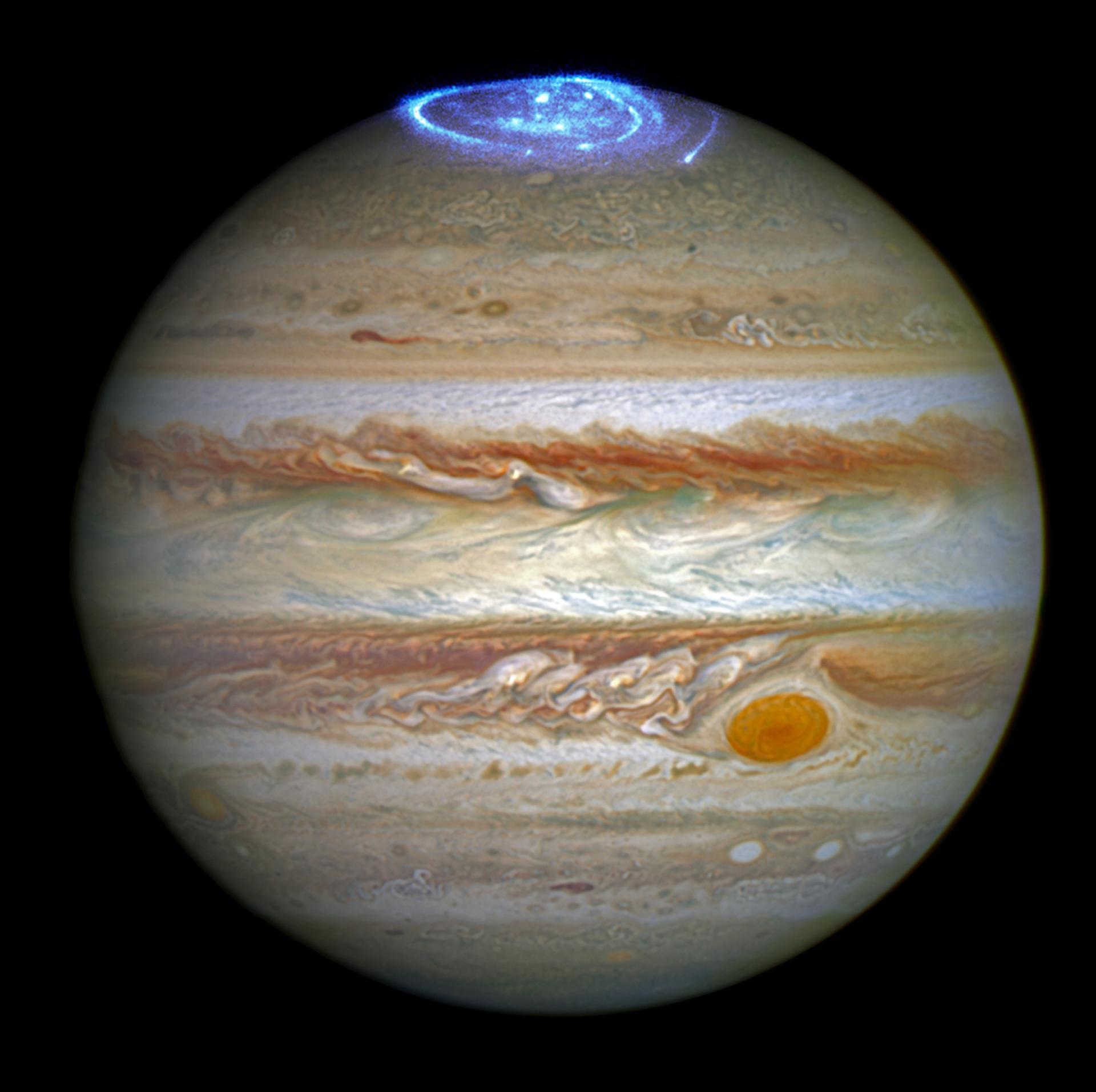
For scale, Jupiter's Great Red Spot is about the size of Earth.

Fifth From the Sun
Jupiter's distance from the Sun is 5.2 times the Earth-Sun distance.

Short and Long
Jupiter's day lasts only 10 Earth hours; its year is 12 Earth years.

Nowhere to Land
As a gas giant, Jupiter has no solid surface. It may have an Earth-sized core.

Big and Light
Jupiter's atmosphere is mostly hydrogen and helium.

Many Moons
As of July 2023, Jupiter had 95 moons.

Faint Rings
The rings were spotted in 1979.

Exploration
Seven robots flew past; two stayed in orbit.

Ingredients for Life?
Jupiter can't support life as we know it.
Super Storm
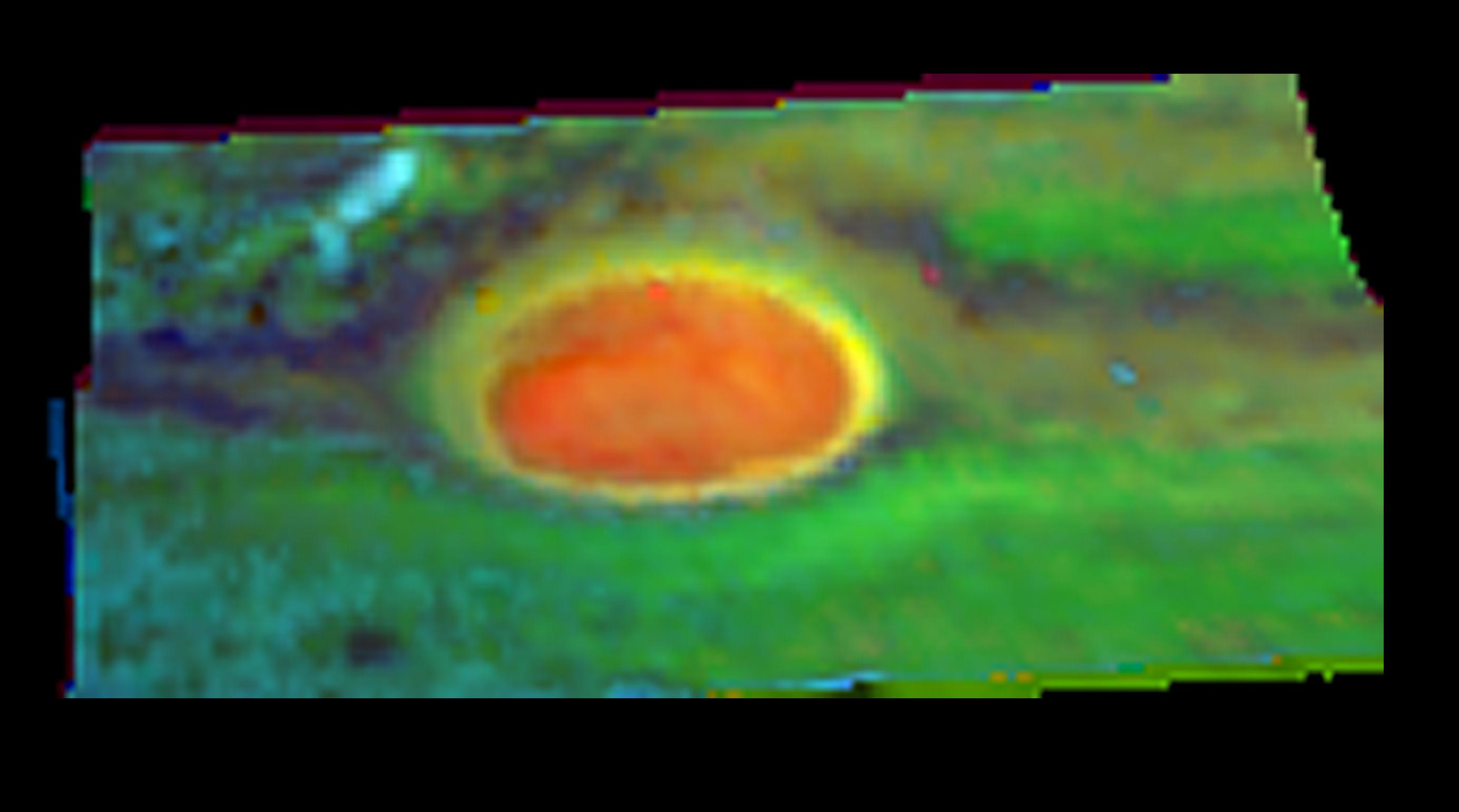
The Great Red Spot is a storm that has raged for more than 100 years.
Planet Jupiter Overview
Jupiter is the fifth planet from the Sun and is, by far, the largest planet in the solar system – more than twice as massive as all the other planets combined.
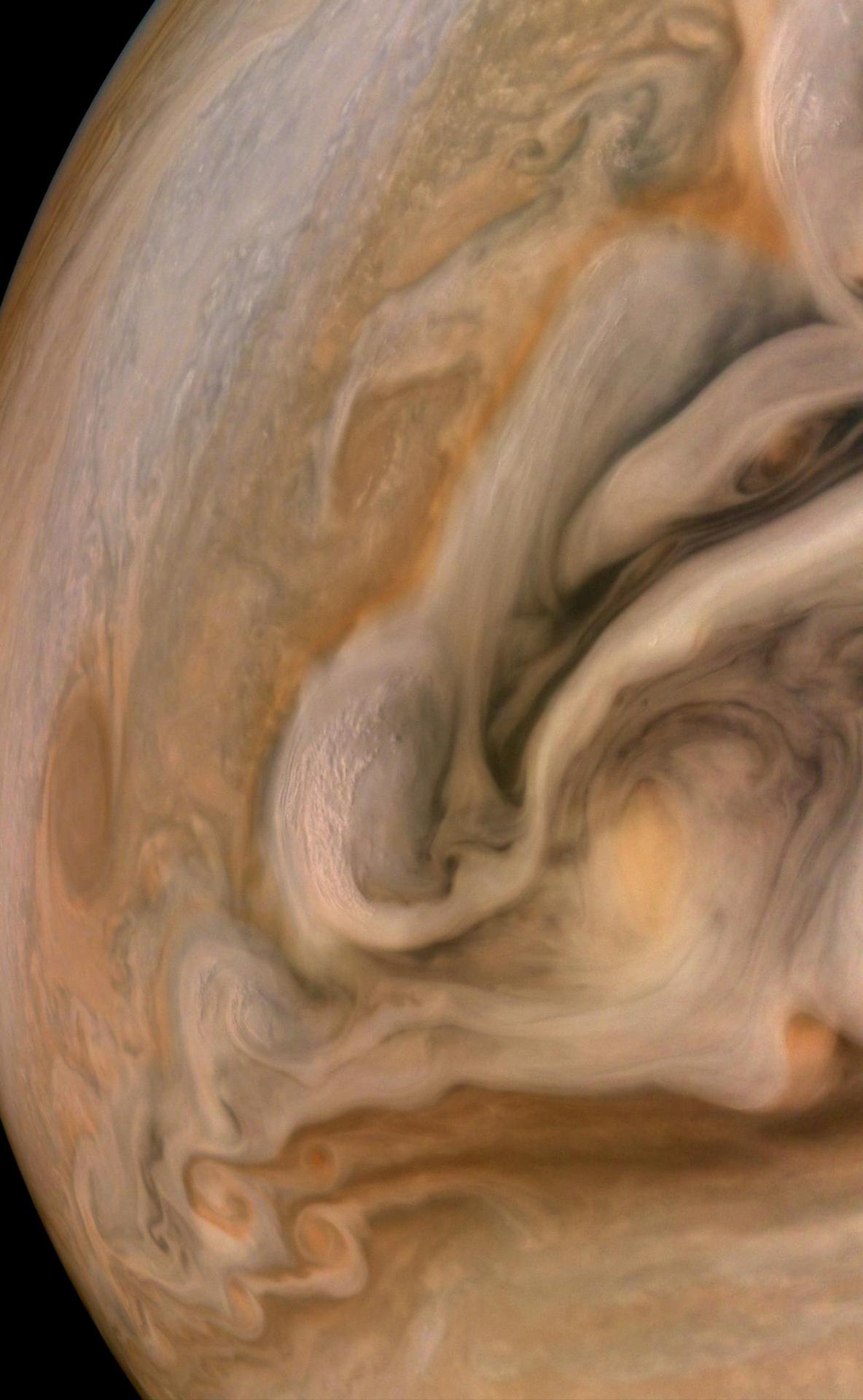
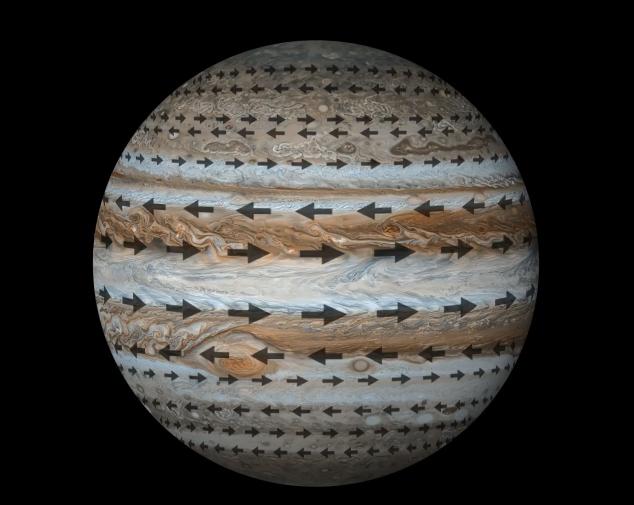
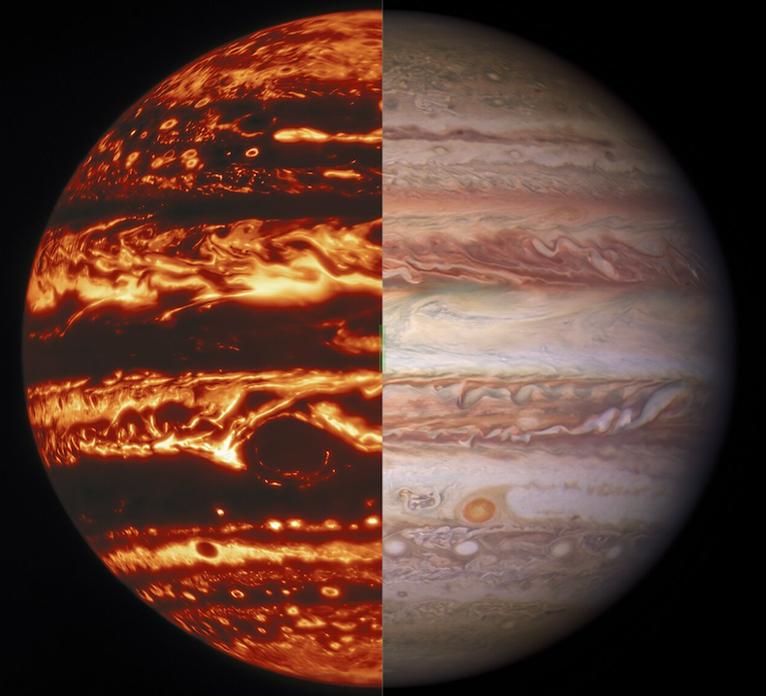
Jupiter's stripes and swirls are actually cold, windy clouds of ammonia and water, floating in an atmosphere of hydrogen and helium. Jupiter’s iconic Great Red Spot is a giant storm bigger than Earth that has raged for hundreds of years.
Jupiter is named for the king of the ancient Roman gods.
Jupiter in Pop Culture
The biggest planet in our solar system has a large presence in pop culture, including many movies, TV shows, video games, and comics. Jupiter and its moons were notable destinations in "The Expanse" series, while various Jovian moons provide settings for "Cloud Atlas," "Futurama," "Power Rangers," and "Halo," among many others. In the movie "Men in Black" when Agent J – played by Will Smith – mentions he thought one of his childhood teachers was from Venus, Agent K – played by Tommy Lee Jones – replies that she is actually from one of Jupiter’s moons.


Jupiter


Missions to Jupiter
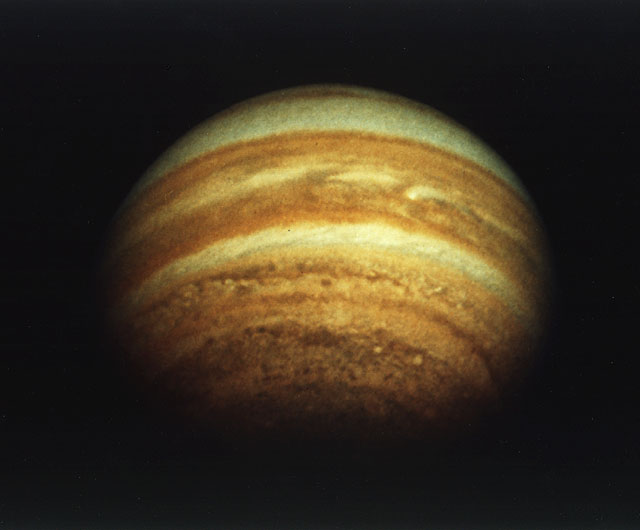
Pioneer 10
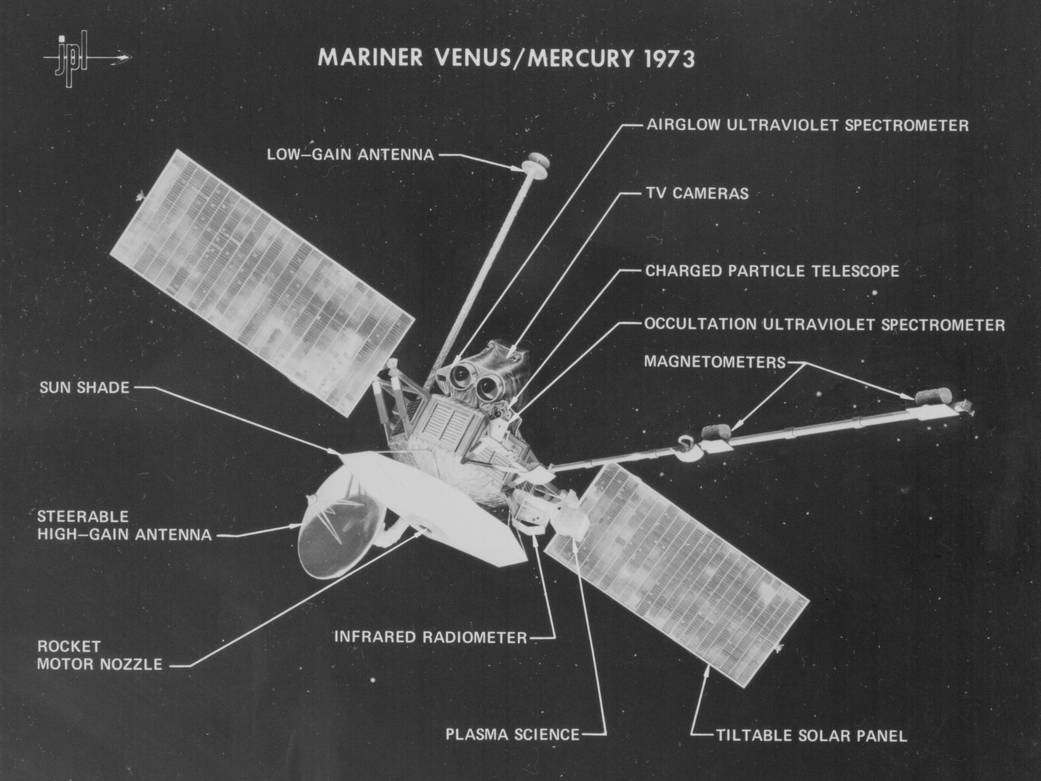
NASA's first spacecraft to visit the outer planets, Pioneer 10 was designed as a 21-month mission to Jupiter, yet lasted more than 30 years.
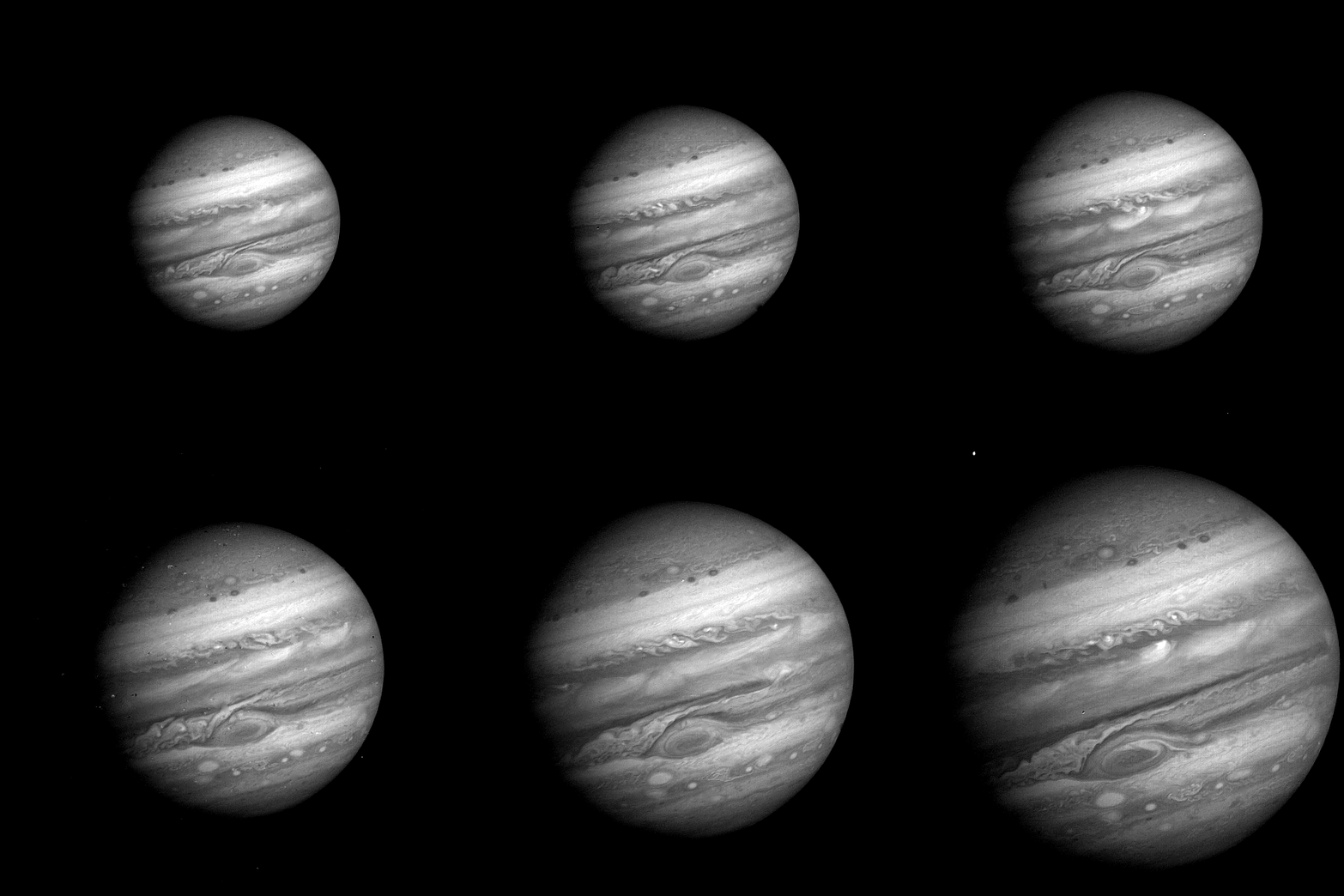
Pioneer 11
The sister spacecraft to Pioneer 10, it flew even closer to Jupiter in 1974 than its sibling had, passing while en route to its destination, Saturn.
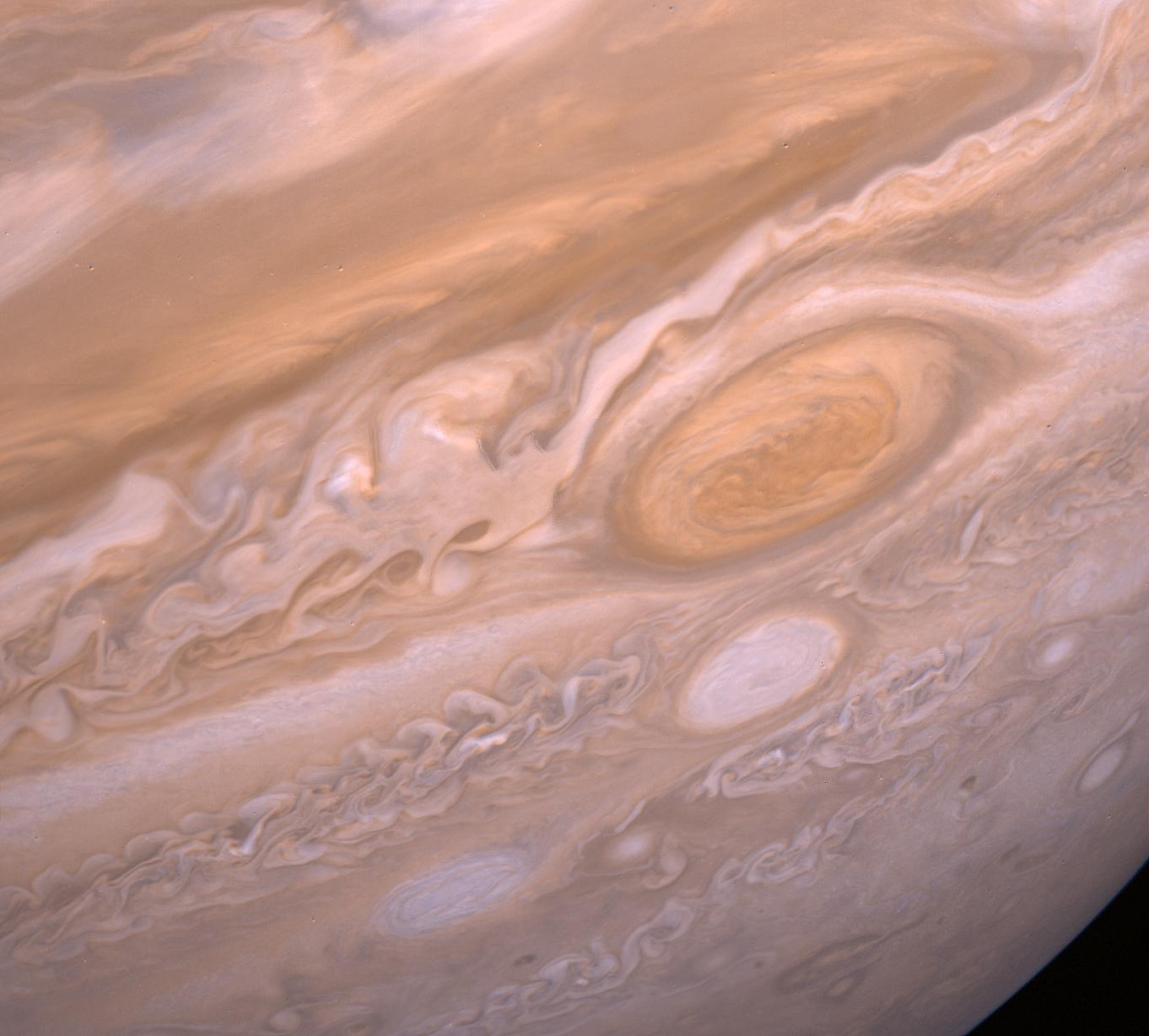
Voyager 1
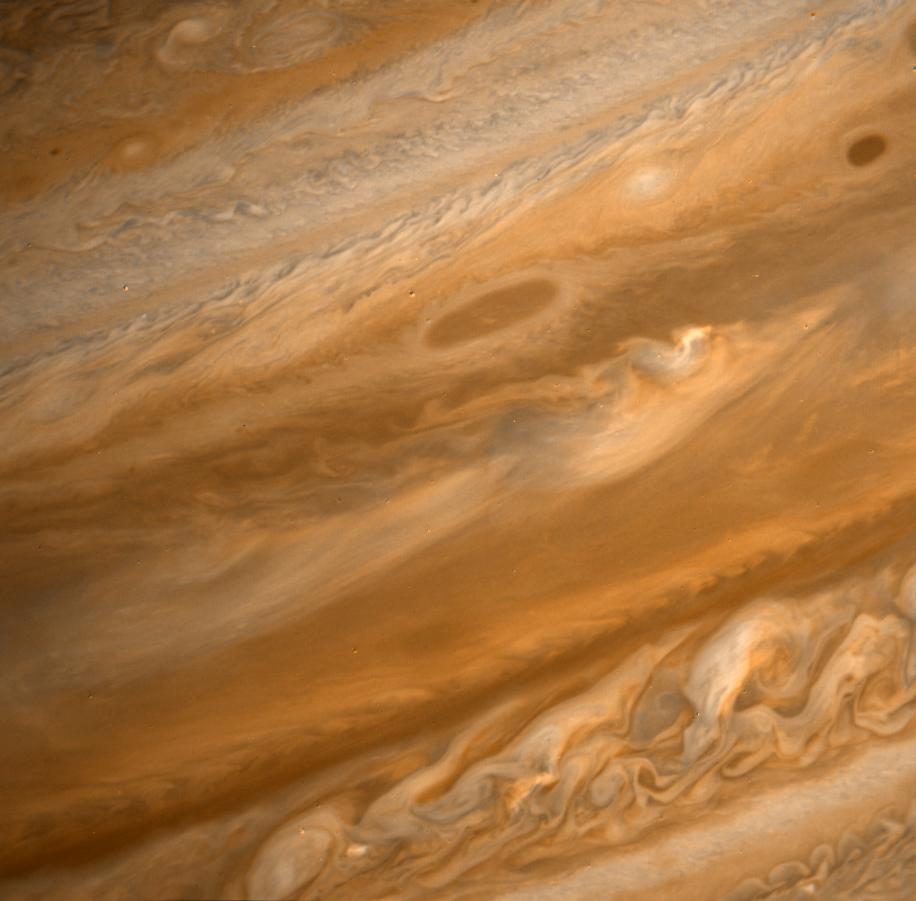
After it arrived at Jupiter in 1979, Voyager 1 discovered a thing ring around the planet, two new moons, and active volcanoes on the volatile moon Io, before continuing on to Saturn and interstellar space.
Voyager 2
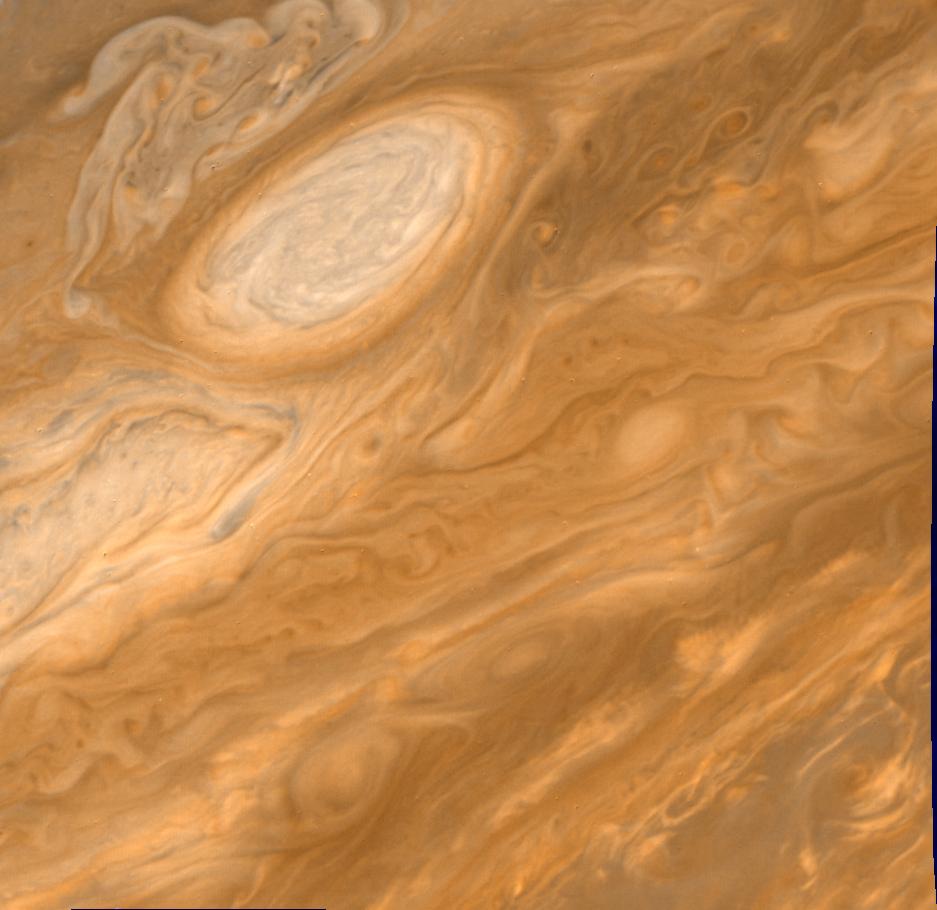
Voyager 2 reached Jupiter a few months after is sibling, capturing images and data of the planet's clouds, moons, and rings, and detecting changes to the iconic Great Red Spot, during the first leg of its Grand Tour of the outer planets.
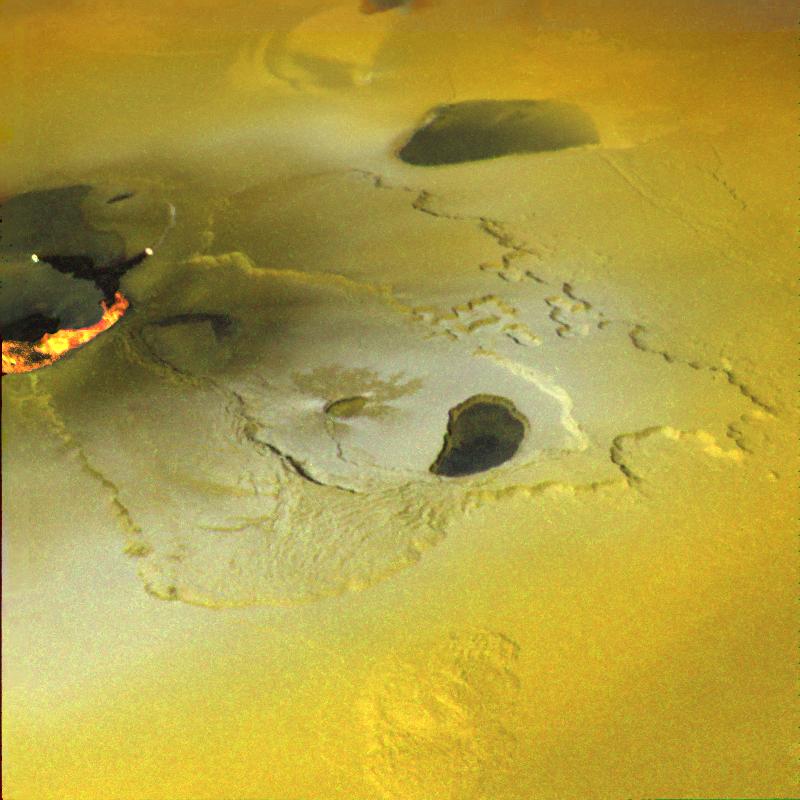
Galileo
During Galileo's 34 orbits of Jupiter, it gathered unprecedented data on the planet's atmosphere, magnetosphere, and evolution. Galileo also observed a comet crash into Jupiter, and while studying its moons discovered evidence of a subsurface ocean on Europa, Ganymede's unique magnetic field, and unparalleled volcanic activity on Io.
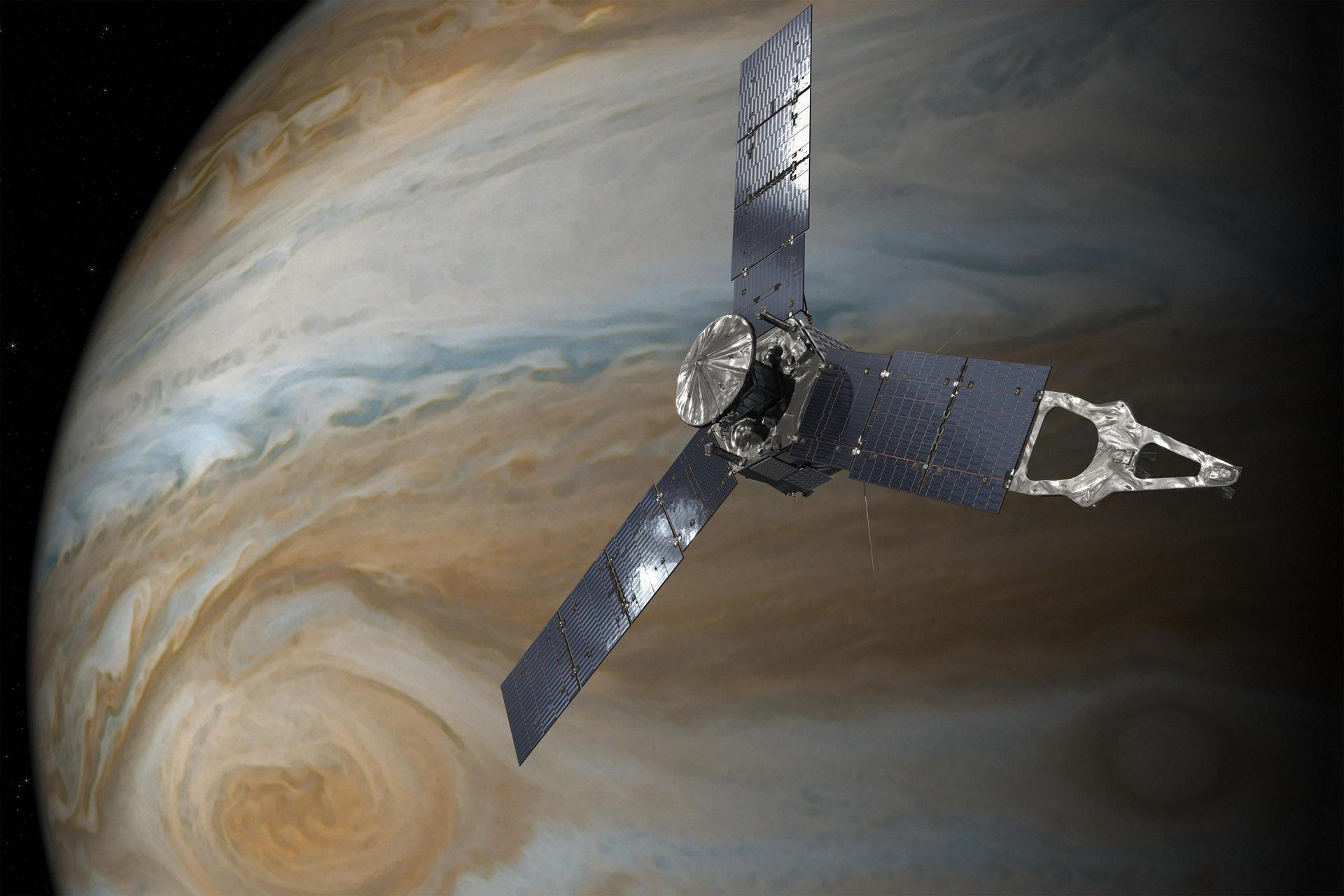
Juno
In orbit around Jupiter since 2016, Juno is probing beneath the planet's dense clouds to answer questions about its origin and evolution, and is scheduled to continue investigating the solar system’s largest planet, its moons, faint rings, and surrounding environment through September 2025.
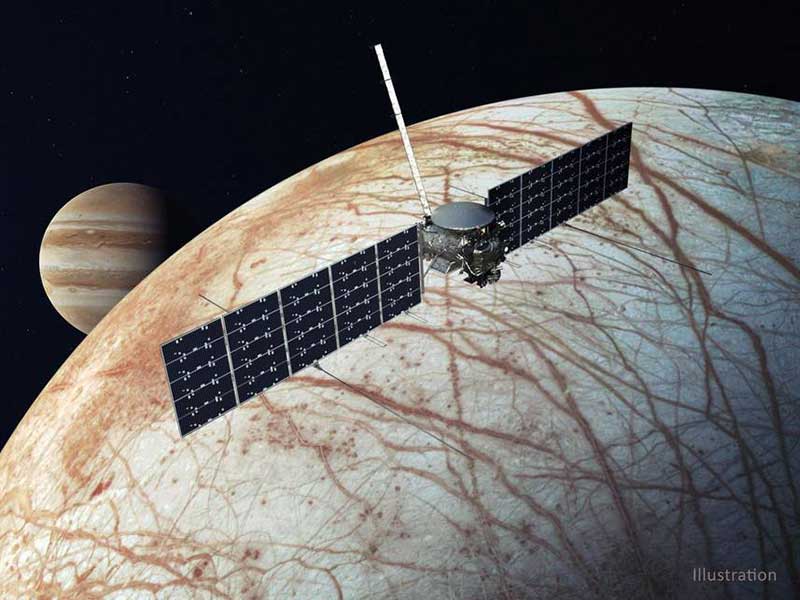
Europa Clipper
NASA's next mission to Jupiter, Europa Clipper is scheduled to launch in 2024 and reach the planet in 2030. Then – during 50 flybys of Jupiter's icy moon Europa – investigate whether there are places below Europa’s surface that could support life.