
Earth
Your home. Our Mission.
And the one planet that NASA studies more than any other.

NASA studies our own planet more than any other. We operate 26 missions in orbit and sponsor hundreds of research programs and studies each year. We observe our planet’s oceans, land, ice, and atmosphere, and measure how a change in one drives change in others. We develop new ways to observe and study Earth's interconnected systems and we build long-term data records of how our planet evolves. The agency freely shares this unique knowledge and works with institutions around the world.
PACE
PACE will help us better understand our ocean and atmosphere by measuring key variables associated with cloud formation, particles and pollutants in the air, and microscopic, floating marine life (phytoplankton).…
Learn More
Recent News and Articles


NASA Earth Day
Celebrate Earth with NASA this year as we delve into how water touches everything. NASA has assembled resources to help you celebrate Earth Day everywhere, prepared an inspiring poster, and is hosting a free public event in Washington, D.C.
Join Earth Day
Our Oceans from Space
NASA's exploration of our oceans from space spans a rich history. Delving into the depths of our oceans unveils the mysteries of our own planet, our home. Therefore, NASA remains steadfast in leading the way in oceanic research.
Greenhouse Gases
NASA has several instruments and tools for measuring and modeling greenhouse gases – where they come from, where they go, and how they are driving climate change. The agency works with federal, state, and international partners to make this information freely available.


NASA, Partners Launch US Greenhouse Gas Center to Share Climate Data
Images of the Day

Spring Floods Sweep Across Central Asia
Rivers overtopped their banks and submerged thousands of homes in Russia and Kazakhstan.

How Deep Was Death Valley’s Temporary Lake?
Researchers used satellite data to calculate the depth of water in this transient freshwater body.

Antelope Valley Abloom
Poppies are sparse, but yellow wildflowers are blooming in Southern California.

Towering Brandberg
This reddish “burning mountain” of granite is the highest point in Namibia.

Looking Up and Down During the Eclipse
Astronauts and photographers captured unforgettable views of Earth and the Sun as the Moon’s shadow swept across North America.

A “Surprisingly Average” Year for Sierra Snowpack
The amount of snow in the California-Nevada mountain range was about average in April 2024—a rare occurrence.

Drawdown of Klamath River Reservoirs
Human-made lakes along the western U.S. river were drained as part of the world’s largest dam removal project to date.
Air Quality
Air pollution is a significant threat to human health and our environment. Instruments on NASA satellites, along with airborne and ground-based sensors, are constantly collecting data on major pollutants in our atmosphere.
Learn More
NASA has a unique vantage point for observing the beauty and wonder of Earth and for making sense of it. Looking back from space, astronaut Edgar Mitchell once called Earth “a sparkling blue and white jewel,” and it does dazzle the eye.
Earth: a photo-essay.
Earth Information Center (EIC)
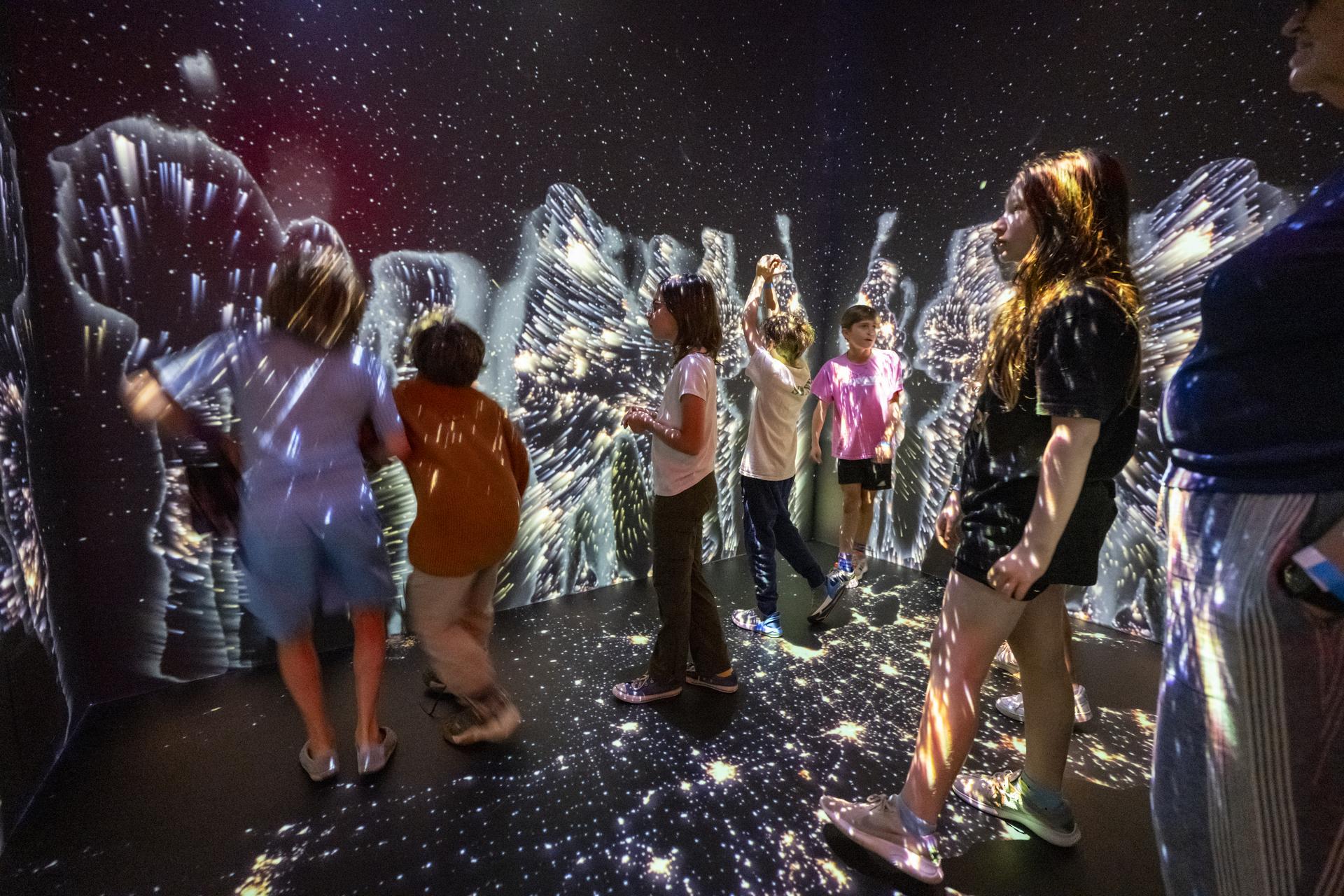
Visit the EIC in person
In an interactive exhibit at NASA Headquarters in Washington, visitors are invited to see Earth as NASA and its research partners see it from space. Open to visitors from 8:30 a.m. to 5:30 p.m. ET each Monday through Friday.

Visit the EIC Online
For six decades, satellites, sensors, and scientists have collected data on Earth’s land, water, air, and climate. On this website, you can glimpse what this data has taught us about sea level rise, air quality, wildfires, greenhouse gases, ice cover, and agriculture.



